
| Language: |


THE YEAR OF SURREALISM

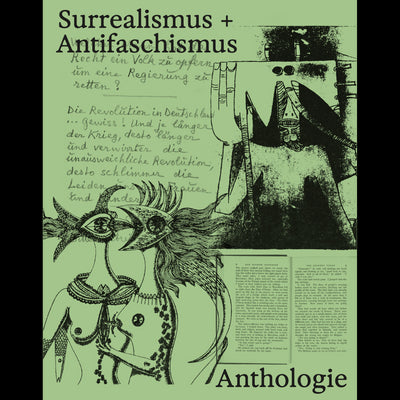
2025 will be a year dedicated to Surrealism – a movement that, almost 100 years after its inception, continues to captivate with its ability to provoke fascination and unveil the unknown. As part of this year of Surrealism, Hatje Cantz will release three unique publications that approach the subject from different perspectives. The first catalog, accompanying the exhibition Surrealism + Antifascism at the Lenbachhaus Munich, explores the political dimension of Surrealism, which opposed the fascist threat. In the Fondation Beyeler in Basel, the collection Surrealist Masterpieces of the Collection Hersaint provides insight into the highlights of Surrealist art, while the Hamburger Kunsthalle's Rendezvous of Dreams examines the dialogue between Surrealism and German Romanticism.
Origins and Emergence of Surrealism
Surrealism emerged in the 1920s as a literary movement that later expanded into the visual arts. Shaped by artists such as Salvador Dalí, René Magritte, and Max Ernst, Surrealism sought to break the boundaries of the rational and logical. The movement was strongly influenced by Sigmund Freud's theories on the unconscious, aiming to foreground the irrational, the unconscious, and the fantastic. Surrealist works are characterized by bizarre, dreamlike, and often contradictory depictions.
The Visual Language of Surrealism
In the visual arts, Surrealism relied on surprising, often illogical combinations of objects and scenes that were intended to confound or astonish the viewer. Collage, automatism, and other experimental techniques were frequently employed to free art from the artist's conscious control. The works reflect a deep interest in the psychological and fantastical aspects of human life, such as the distortion of time, space, and perspective.
Surrealism as a Political Movement
In addition to its artistic significance, Surrealism also had a strong political dimension. The movement was critical of established society and its conventions. Particularly after World War I, Surrealists felt alienated from the rational world order and criticized the destructive impacts of capitalism and nationalism. Many Surrealists were influenced by revolutionary ideas, and some, like André Breton, associated Surrealism with socialist and anarchist ideals, advocating for the liberation of the individual and the destruction of authoritarian structures.
Surrealism + Antifascism – Städtische Galerie im Lenbachhaus Munich
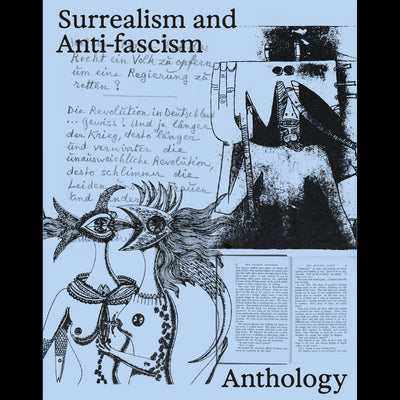
The catalog for the exhibition Surrealism + Antifascism explores the political dimension of Surrealism, which was not only an artistic movement but also a powerful response to the fascist threat. This comprehensive volume brings together key texts and manifestos of political Surrealism, including writings by André Breton, Georges Bataille, Walter Benjamin, and other prominent figures. With around 600 images and essays by renowned authors such as Theodor W. Adorno and Aimé Césaire, the anthology sheds light on how Surrealism fought against colonial and fascist tendencies, and how it functioned as an emancipatory movement extending from the 68er movement and beyond. A striking collection of thoughts and artworks that re-examines the Surrealist canon.
Release in March 2025, 696 pages
Surrealist Masterpieces from the Collection Hersaint – Fondation Beyeler
The catalogue "Surrealist Masterpieces from the Collection Hersaint" presents a world premiere, showcasing the significant collection of Claude Hersaint. Featuring around 50 key works from the Hersaint collection, including pieces by Salvador Dalí, René Magritte, and Max Ernst, this catalog offers a unique insight into the development of Surrealism. Built over many years by Hersaint, an early and passionate supporter of Surrealism, the collection includes iconic works from the first generation of Surrealist artists as well as one of the largest private collections of Max Ernst. The catalog celebrates this extraordinary collection and provides in-depth essays exploring the relationships between artists and collectors.
Rendezvous of Dreams: Surrealism and German Romanticism – Hamburger Kunsthalle
The catalog for the exhibition "Rendezvous of Dreams" explores the surprising connections between Surrealism and German Romanticism. Both movements share a fascination with the irrational, dreamlike, and unconscious. The exhibition and accompanying catalog reveal how Surrealists, such as Max Ernst and Paul Klee, paid homage to the Romantics like Caspar David Friedrich and Philipp Otto Runge, drawing inspiration from their depictions of the supernatural and inner vision. With numerous works from the resistance period, the catalog illustrates how deeply Romantic ideas influenced Surrealist art. The volume brings together engaging essays and around 300 images, deepening this transhistorical connection and offering new perspectives on 20th-century art history.
Veröffentlicht am:
06.06.2025
FÜR SIE EMPFOHLEN
Neu

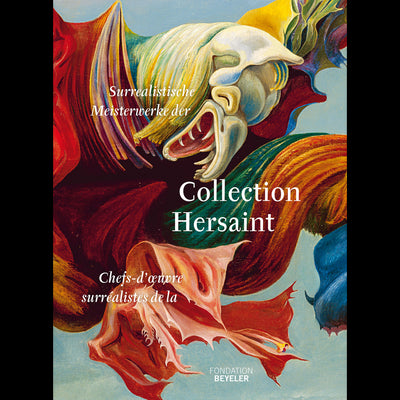
Surrealistische Meisterwerke der / Chefs-d'œuvre surréalistes de la Collection Hersaint
Der Schlüssel der Träume / La Clef des songes
Buch (978-3-7757-5932-8
)
Deutsch, Französisch
€ 44,00
Neu
Surrealistische Meisterwerke der / Chefs-d'œuvre surréalistes de la Collection Hersaint
Der Schlüssel der Träume / La Clef des songes
Buch (978-3-7757-5932-8
)
Deutsch, Französisch
€ 44,00